


Teff grass for horses – the low-sugar, low-fructan forage grass
The sugar content in forage is playing an increasingly important role in horse feeds. Many horses suffer from metabolic disorders such as equine metabolic syndrome (EMS), equine Cushing’s syndrome (ECS or PPID) – often together with laminitis – or from muscle metabolism disorders such as PSSM. These horses need a ration that meets their requirements and is as low in sugar as possible.
As forage forms the basis for any healthy equine diet, it is of key importance. The latest hay and grass analyses also reveal increasingly high sugar and fructan content – especially when the grass has been harvested under stressful conditions such as drought or extreme temperature fluctuations.
This is where teff grass offers an interesting alternative with several benefits: it is a naturally low-sugar and low-fructan forage grass that is highly palatable with a good texture. As a so-called "C4 plant", teff is well adapted to a hot, dry climate so it is suitable for cultivating under climate change conditions.
What is teff and where does it come from?
Teff (Eragrostis tef) is an ancient cultivated plant originating in East Africa. In Ethiopia, Eritrea and neighbouring regions of the East African uplands, teff has been cultivated for several millennia – mainly as a basic foodstuff. The tiny seeds are used there to produce teff flour, which is used in the traditional injera flatbread, among other things.The botanical genus name Eragrostis comes from the Greek and roughly means "love grass". It describes the fine, delicate appearance of this grass variety. The filigree leaf texture not only gives the plant an attractive appearance. It also makes it palatable to grazing animals – one reason why Eragrostis varieties have always been considered a valuable forage plant.
Teff is a C4 plant – what does that mean?
Like maize or millet, teff is a C4 plant. These plants use a special photosynthetic pathway that is significantly different from that of the C3 forage grasses common in Central Europe, e.g. timothy, rye and cocksfoot, etc.The C4 metabolism is especially efficient under warm, dry and light-intensive conditions. C4 plants can make effective use of CO₂ even at high temperatures, lose less water and can do well even under stressful conditions. By contrast, many C3 grasses store more soluble sugars and fructans under heat or drought stress.
Teff grass is much more stable in regulating sugar formation and primarily stores energy in the form of structural carbohydrates such as cellulose. The content of easily soluble sugars remains comparatively low – a crucial benefit for feeding horses with a sensitive metabolism.
At the same time, teff grass, as a C4 plant, is tolerant to drought, grows stably and provides a consistent feed quality. This not only makes it interesting from a nutritional perspective but also from an agricultural point of view as it provides a future-proof crop given the changing climate.
Teff grain for humans – teff grass for horses
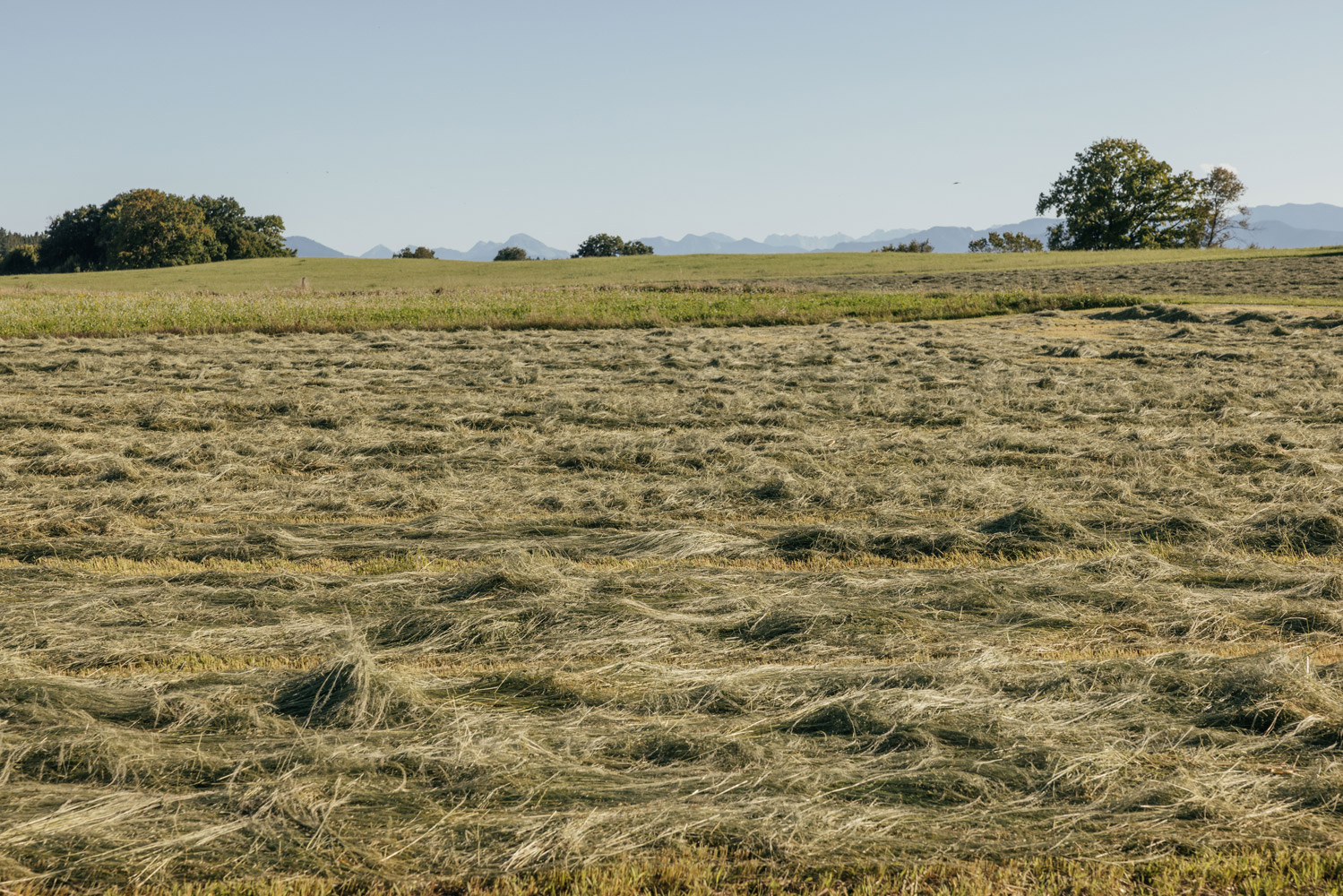
While teff is valued in the food sector because of its gluten-free grain, a different form of it is used in horse feeds: teff grass.For forage production, special varieties are used that are adapted to Central European climatic conditions and have been selected for high growth. The grass is harvested much earlier than in grain cultivation – before the seeds are formed.
This results in finely textured, palatable forage with low sugar, starch and fructan content.
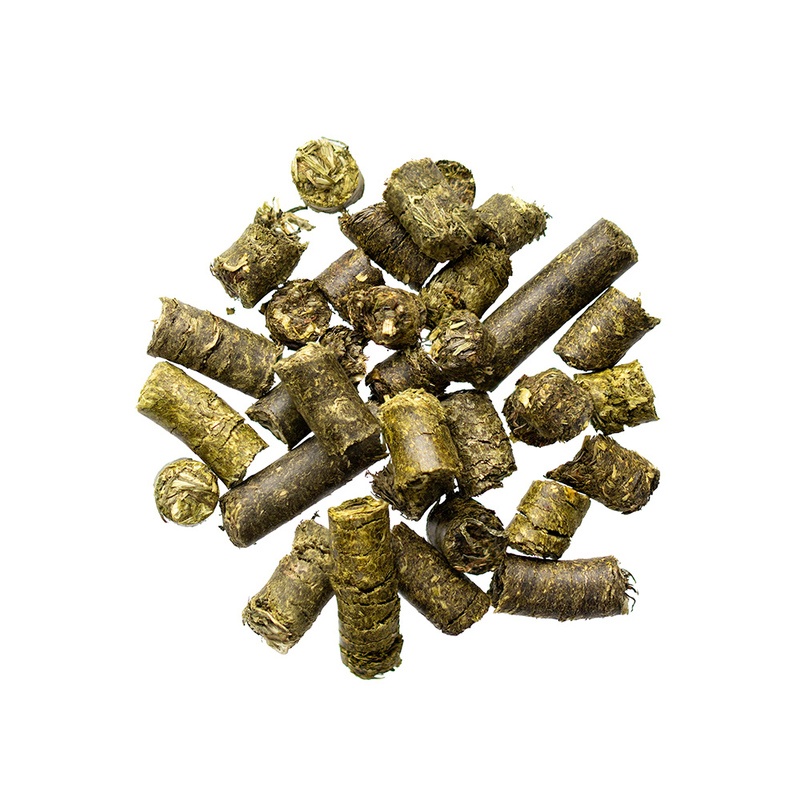
Teff grass can be fed fresh or preserved, for example as hay, cobs or pellets, so it can be flexibly integrated into different feed concepts.
Special cultivation – quality begins in the field
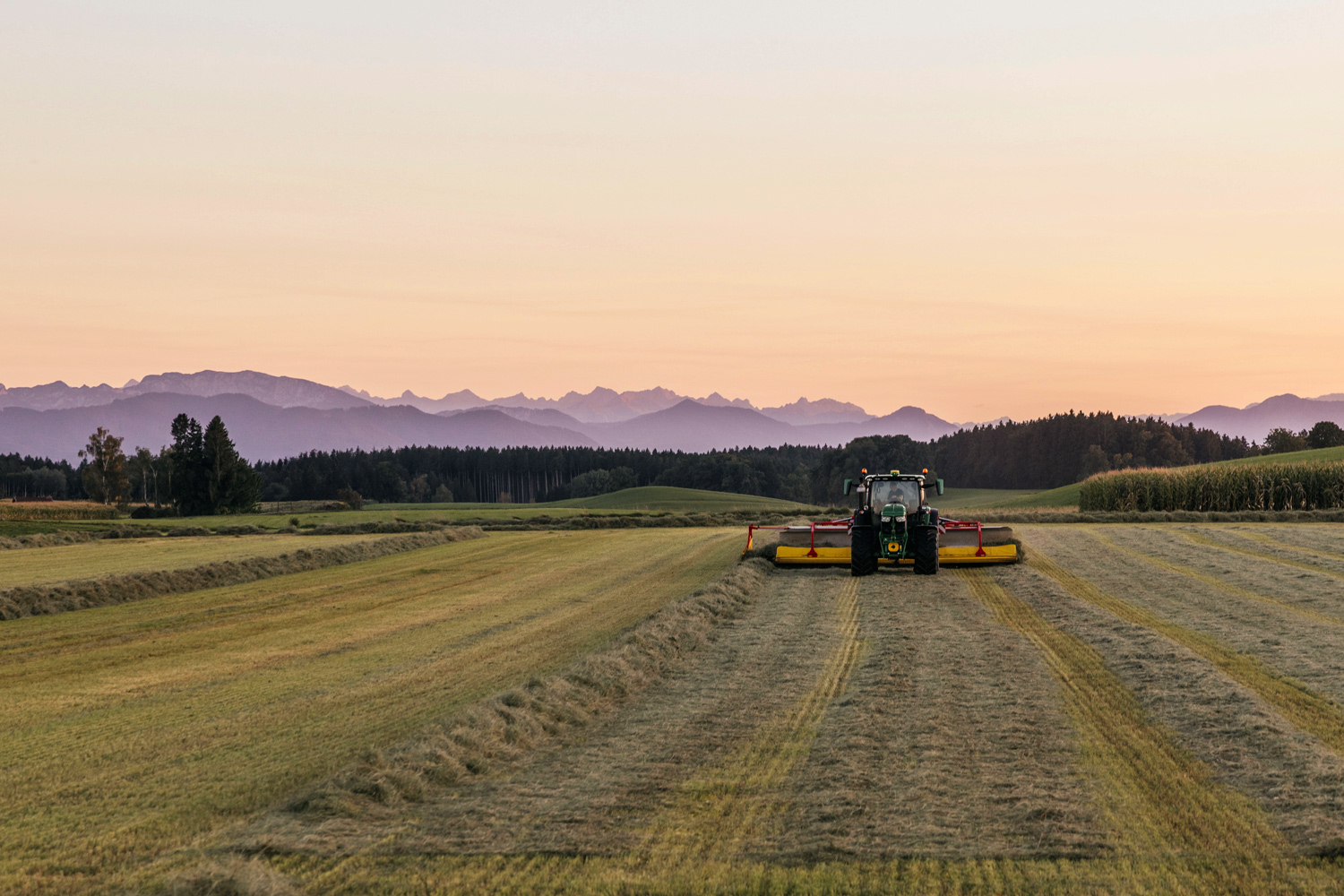
Teff is not a conventional grassland plant for extensive standard cultivation in Central Europe. Its origins in hot regions bring particular challenges. This is precisely why it is specially cultivated under specific conditions.Teff grass loves warmth and cannot tolerate cold temperatures. It can only be sown when the soil temperature is high enough, and late frosts can damage young plants. The very fine seeds require careful seed bed preparation and teff grass grows very slowly in the early development phase. And, to achieve the desired feed quality, the harvest time must also be chosen precisely.
These high requirements mean conscious quality control. Teff grass is not a mass-produced crop that grows by chance but a specifically cultivated crop.
The effect of synephrine in teff grass
Possible synephrine content is occasionally discussed in connection with teff grass. Synephrine is a naturally occurring secondary plant substance that is mainly known from citrus fruit. Some investigations have revealed small traces in certain Eragrostis species – including teff grass.Synephrine affects the organism via the sympathetic nervous system and, especially in higher doses, can stimulate the metabolism and influence mobilisation of energy reserves. In humans, synephrine is used, for example, to manage weight, improve performance or to activate the fat metabolism. In horses, possible effects mainly relate to the sugar and fat metabolism and the cardiovascular system.
However, because of the very low concentrations occurring in teff grass, no relevant physiological effects are expected in horses. Nevertheless, it is important to note that, even in very small quantities in the blood, synephrine is categorised as relevant under doping regulations. Feeding teff grass or products derived from it is therefore not recommended for active competition horses. This aspect is normally less important when it comes to feeding leisure horses.
Summary: teff grass in horse feeds
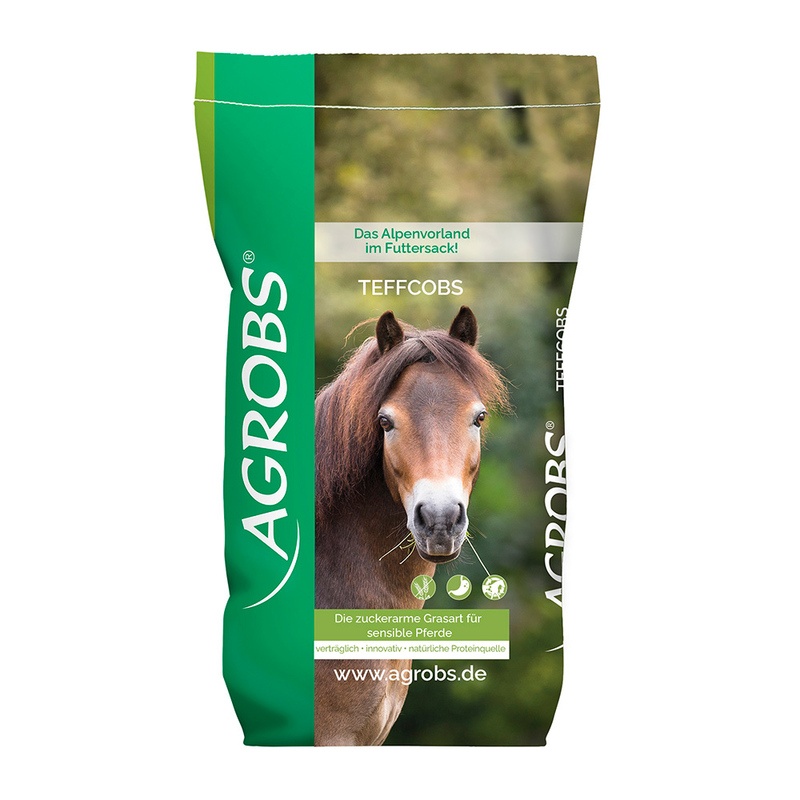
Teff grass combines nutritional benefits with future-proof crop production: as a low-sugar and low-fructan, richly textured forage plant, it offers an interesting addition to horse feeds, especially for horses with a sensitive metabolism. At the same time, it can also accommodate changed conditions in feed production, such as increasing dry periods, fluctuating precipitation distributions and increasing requirements for robust, adaptable forage plants.You can find out more about Teffcobs from AGROBS and their possible uses here.
Would you like to feed your horse Teffcobs and integrate them into their feed plan? Our feed experts will be happy to advise you and work together with you to draw up a feed plan that is individually tailored to your horse. Get feed advice here.
Find out more about feeding horses with metabolic disorders here:
Barbara Keßler, M.Sc. (Agriculture)
April 2026 © Agrobs GmbH & Co. KG
Sources:
- Skillman, L. (2007): Teff may be a summer forage option. University of Kentucky. Available at: Teff May Be a Summer Forage Option | College News
- McCown, S.; Brummer, M.; Hayes, S.; Olson, G.; Smith, S. R.; Lawrence, L. M. (2012): Acceptability of teff hay by horses. Journal of Equine Veterinary Science, 32, 327–331.
- Stanier, W. B.; Brussard, J. R.; Repard, N. M.; Hall, M. H.; Burk, A. O. (2010): Voluntary intake and digestibility of teff hay fed to horses. Journal of Animal Science, 88, 3296–3303.
- Heuzé, V.; Thiollet, H.; Tran, G.; Lebas, F. (2017): Tef (Eragrostis tef) hay.
- Feedipedia (INRAE, CIRAD, AFZ, FAO). Available at: https://www.feedipedia.org
- Martinson, K. (n. d.): Fitting teff into the horse diet. University of Minnesota Extension. Available at: https://extension.umn.edu/horse-pastures-and-facilities/fitting-teff-horse-diet
- Brewer, K.; Machin, J. J.; Maylin, G.; Fenger, C.; Morales-Briceño, A.; Neidhart, M. M.; Tobin, T. (2022): Case report: Synephrine, a plant substance yielding classic environmental clusters of hay related identifications in equine urine. Drug Testing and Analysis, 14 (4), 774–780. Available at: https://doi.org/10.1002/dta.3212
- DeBoer, M. L.; Hathaway, M. R.; Weber, P. S. D.; Sheaffer, C. C.; Kuhle, K. J.; Martinson, K. L. (2017): Glucose and Insulin Response of Aged Horses Grazing Alfalfa, Perennial Cool-Season Grass, and Teff During the Spring and Late Fall. Journal of Equine Veterinary Science, 52, 62–67. Available at: https://pubmed.ncbi.nlm.nih.gov/30929773/
- Lacefield, G. D. (n. d.): Teff – Old plant, new use. University of Kentucky Cooperative Extension Service. Available at: https://www.dearborncounty.org/egov/documents/1404927950_84056.pdf
- Staniar, W. B.; Bussard, J. R.; Repard, N. M.; Hall, M. H.; Burk, A. O. (2010): Voluntary intake and digestibility of teff hay fed to horses. Journal of Animal Science, 88 (10), 3296–3303. Available at: https://doi.org/10.2527/jas.2009-2668
- Sage, R. F. (2004): The evolution of C4 photosynthesis New Phytologist, 161(2), 341–370. Available at: https://pubmed.ncbi.nlm.nih.gov/33873498/
- Sage, R. F.; Zhu, X.-G. (2011): Exploiting the engine of C4 photosynthesis. Annual Review of Plant Biology, 62, 19–43. Available at: https://doi.org/10.1146/annurev-arplant-042110-103717Miller, D. R. (2014): Teff grass: Crop overview and forage production guide. King’s AgriSeeds. Available at: https://kingsagriseeds.com/wp-content/uploads/2014/12/Teff-Grass-Management-Guide.pdf
- Schneider, M.; Scharf, F.; Hartmann, S. (2024): Teff im Test: Exotisches Gras als Futtermittel und Zwischenfrucht. In: Bayerisches Landwirtschaftliches Wochenblatt. Available at: https://www.wochenblatt-dlv.de/
- Feldsaaten Freudenberger GmbH & Co. KG (n. d.): Teffgras – eine Alternative? Available at: https://www.freudenberger.net/downloadlink-7210