


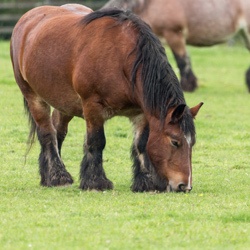
Equine metabolic syndrome - help! My horse is too fat!?
Everybody knows that an overweight horse is too fat with an excessive body fat percentage. After a certain point, this becomes what is known as obesity in medicine. This is the specialist term for being pathologically overweight.So what is equine metabolic syndrome (EMS)?
EMS isn't a disease as such. It's a syndrome that groups together risk factors that can lead to metabolic laminitis. Something known as insulin dysregulation plays a key role in this form of laminitis. Being overweight can lead to insulin dysregulation because body fat is tissue that produces hormones and affects the metabolism.But lean horses can also suffer from insulin dysregulation, which puts them at just as much risk.
How is laminitis related to the horse's insulin level?
Insulin is an important hormone that regulates blood sugar levels, for example. When blood sugar increases after a meal, the pancreas excretes insulin. This hormone "opens" the cells so that sugar from the blood can get in and act as an energy source.Horses with insulin dysregulation have raised insulin levels in their blood, either temporarily or permanently, compared with horses with a healthy metabolism. This is called hyperinsulinemia. It occurs when the pancreas excretes too much insulin or when the body cells can no longer "open" as easily. This is called insulin resistance. Both causes can also occur at the same time. The body notices that its insulin is no longer working properly and keeps excreting more of it.
Too much insulin in the blood is dangerous for the hoof dermis. Even though we still don't fully understand the exact mechanism at cellular level, we do know that hyperinsulinemia triggers processes in the dermis that can lead to hormonal laminitis and its consequences. At the same time, hormonal laminitis is the most common cause of laminitis. It's thought that around 90 percent of all laminitis cases are triggered by hyperinsulinemia. By contrast, toxic laminitis and concussion laminitis only make up a fraction of cases and have a different clinical course.
Round isn’t healthy: obesity in horses has many consequences
What diagnostics are available for EMS?
Is my horse "just" too fat, or does it also have insulin dysregulation? Many horse owners wonder this. It's easy to tell if your horse is too fat by looking at its body condition score. Blood tests can establish whether there is an insulin metabolism disorder that presents a risk factor for laminitis. Basal insulin can be measured at the yard where the horse is kept. Raised values definitely indicate the presence of insulin dysregulation.But a low value doesn't necessarily mean everything is okay. A value in the normal range doesn't rule out insulin dysregulation. The test only confirms a suspicion; it doesn't rule anything out. So-called dynamic tests, where the insulin value is measured before and after carbohydrate consumption, are more conclusive. Because they are more complex, they can usually only be conducted in a clinical setting.
It's interesting to know whether or not there is an insulin metabolism disorder, but the management isn't actually any different. Diet and exercise are key both for a horse that is "just" too fat and for a horse with insulin dysregulation.
How can you prevent laminitis?
Correctly feeding overweight horses – enough of everything, but not too much
Roughage is always the basis
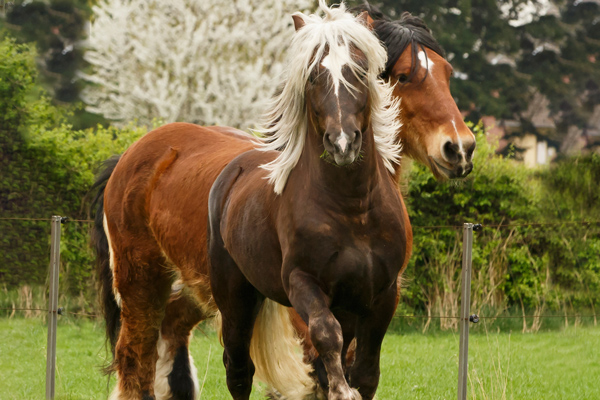
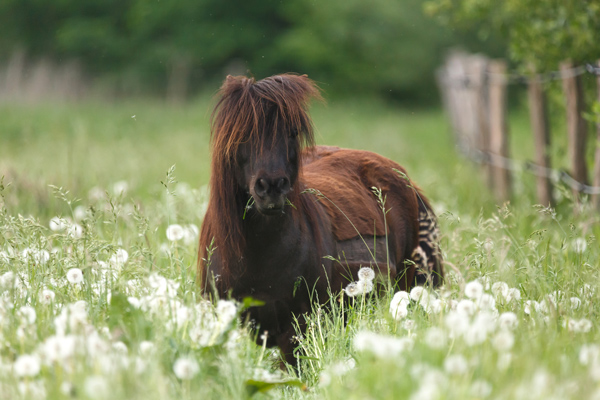
First and foremost, horses need enough roughage – even if they are too fat. They should be allowed to eat at least 1.5 kg of roughage per 100 kg of ideal body weight. The problem is that hay in this part of the world is often too high-energy. Some horses are such good doers that even 1.5 kg of hay per 100 kg ideal weight can exceed maintenance requirements for energy. These are mainly small, hardy breed horses such as Haflingers, Icelandic Horses, Fjords, Welsh Cobs or traditional cobs. If the horse will tolerate it, you can replace up to a third of the hay with feed straw to save energy. This reduces the content of easily digestible carbohydrates in the ration. Feeding straw makes some horses constipated so you should start carefully and keep a close eye on their droppings.How important is protein intake in fat horses?
Because of the changing climate, hay rationing is often not as easy as it used to be. This is because pasture is exposed to more drought and heat stress. As a result, grasses form more carbohydrates ("sugars") and fewer proteins. Feeding a hay-straw mix can soon result in protein requirements not being met. If you keep feeding this ration, horses can break down a lot of muscle mass to make up for the protein deficit. This should be avoided, because muscles also burn energy at rest and well-trained muscles can even improve insulin metabolism.
When it comes to feeding in practice, we often see that a sufficient protein and amino acid intake isn't a given, because horse owners are concerned that protein could trigger laminitis. We used to think this was the case, but now we know, that it is primarily overfeeding with easily digestible carbohydrates that causes insulin levels to shoot up, leading to laminitis. Horses with insulin dysregulation do respond to protein feed by excreting more insulin than healthy horses, but this is far from comparable with the insulin values after a carbohydrate-rich feed.
Don't forget micronutrients – trace elements and vitamins
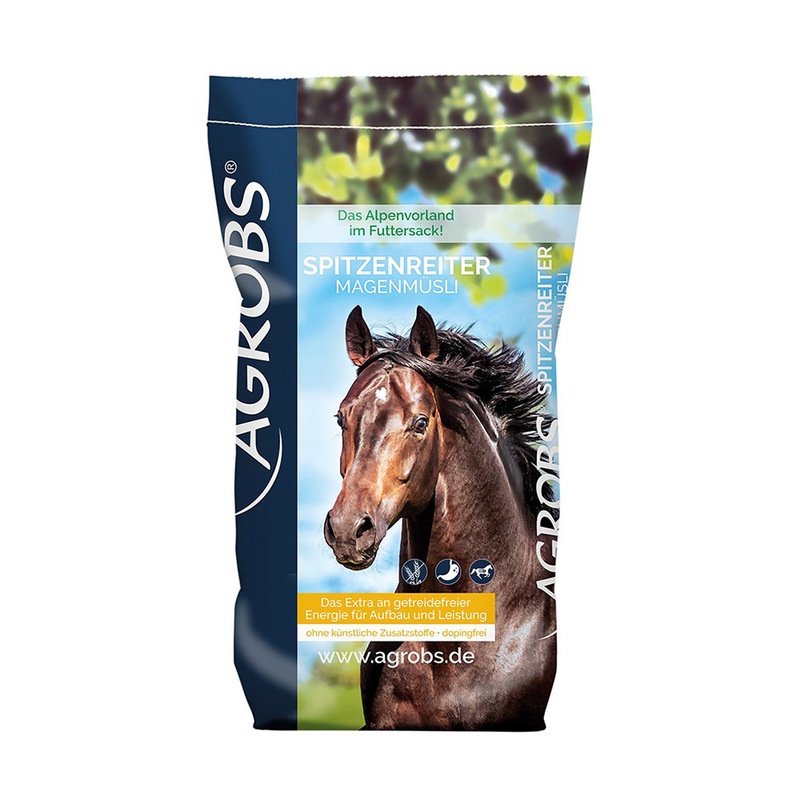
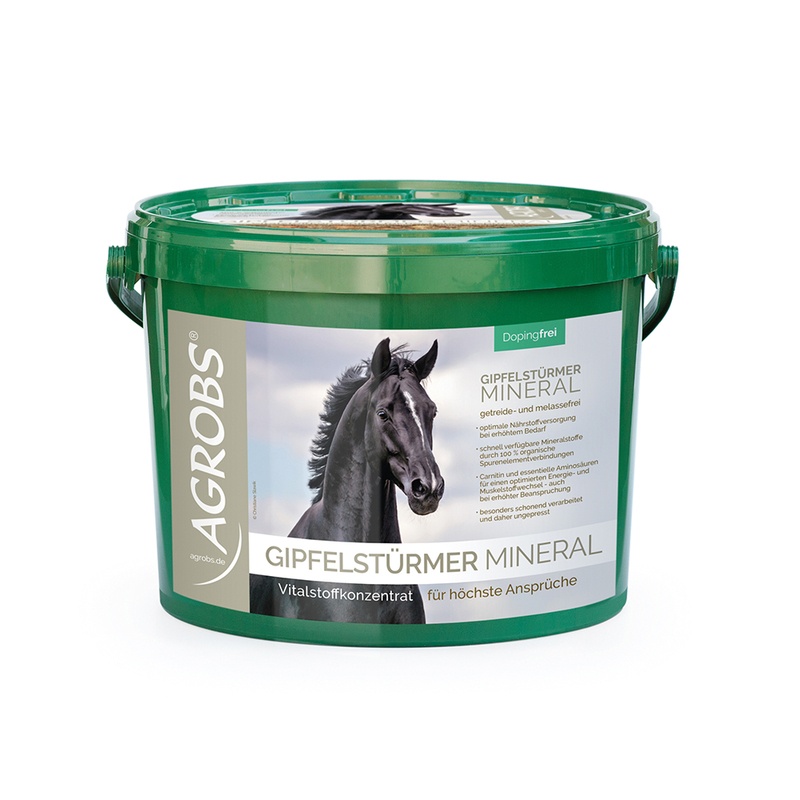
By reducing the quantity of the feed, you also reduce the nutrient quantity of the ration. To ensure that no nutrient deficiencies occur whilst on a diet, you should supplement the ration with a mineral feed to provide important trace elements and vitamins. Hay is usually deficient in zinc, copper, selenium and iodine. As grass isn't recommended as a forage source for most overweight horses, you should also consider fat-soluble vitamins – especially vitamin E, but also vitamins A and D.Concentrate feed and grass – are they really bad for overweight horses?
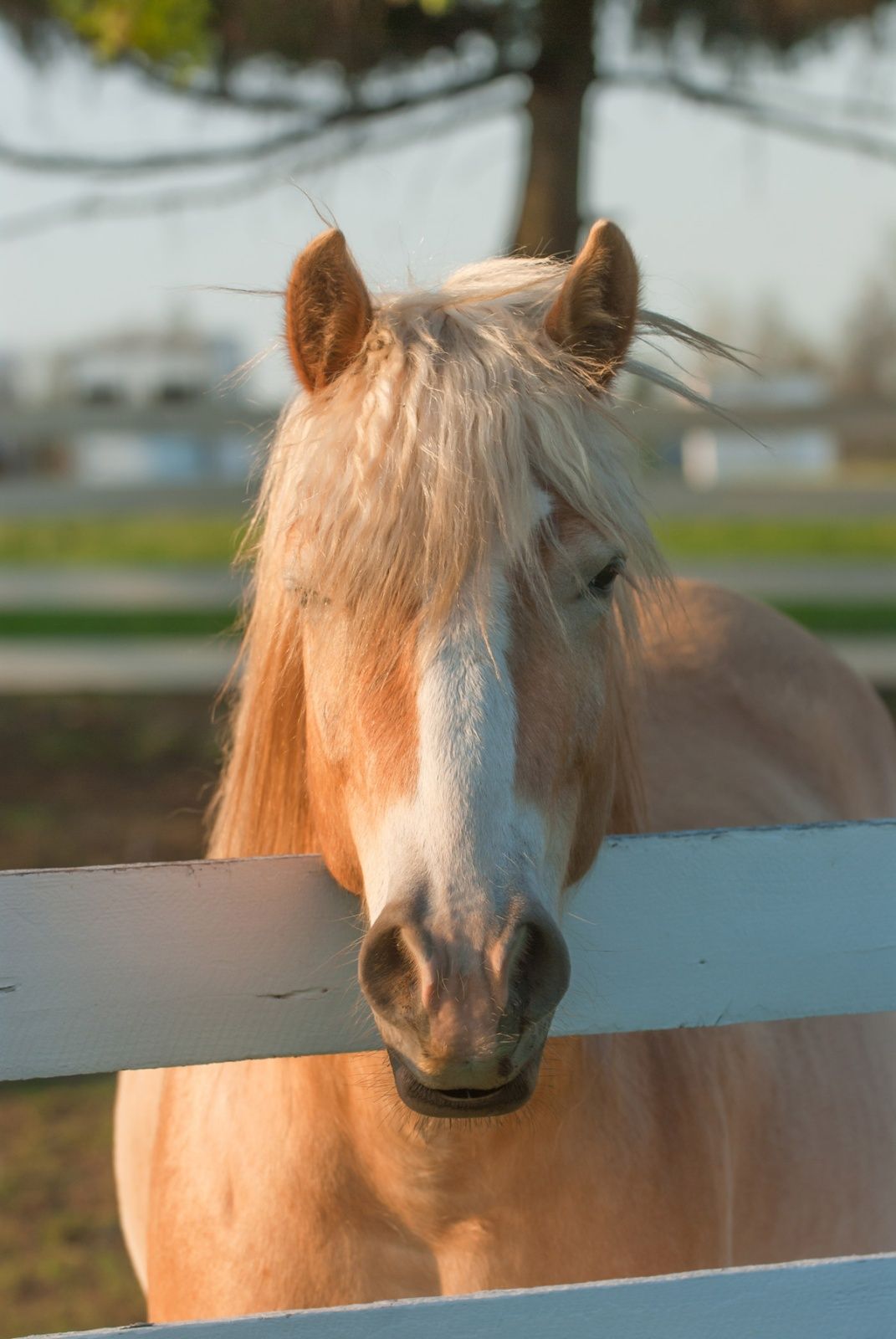 and, ideally, shouldn't be allowed to graze either, unless their intake can be monitored by means of strip-grazing or a well-fitting grazing muzzle. Simply reducing grazing time to one or two hours usually doesn't have an effect: it just means horses eat faster, which can even increase the risk of laminitis.
Important: concentrate feed is really only necessary if a horse is becoming visibly ribby on forage alone. Daily exercise itself doesn't require concentrate feed, as long as the horse maintains an ideal weight.
Sugar content in roughage – do I need to soak the hay?
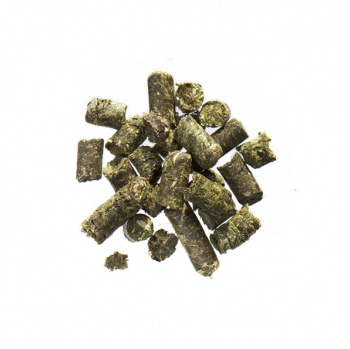
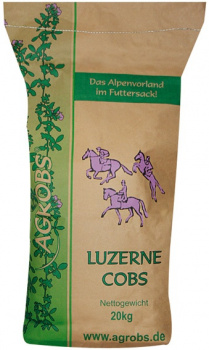
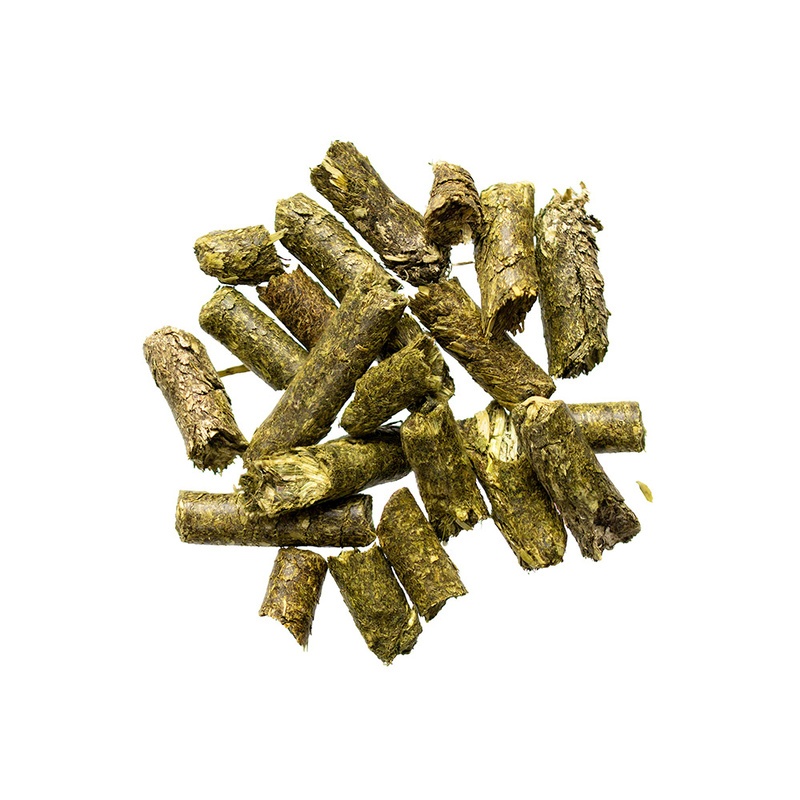
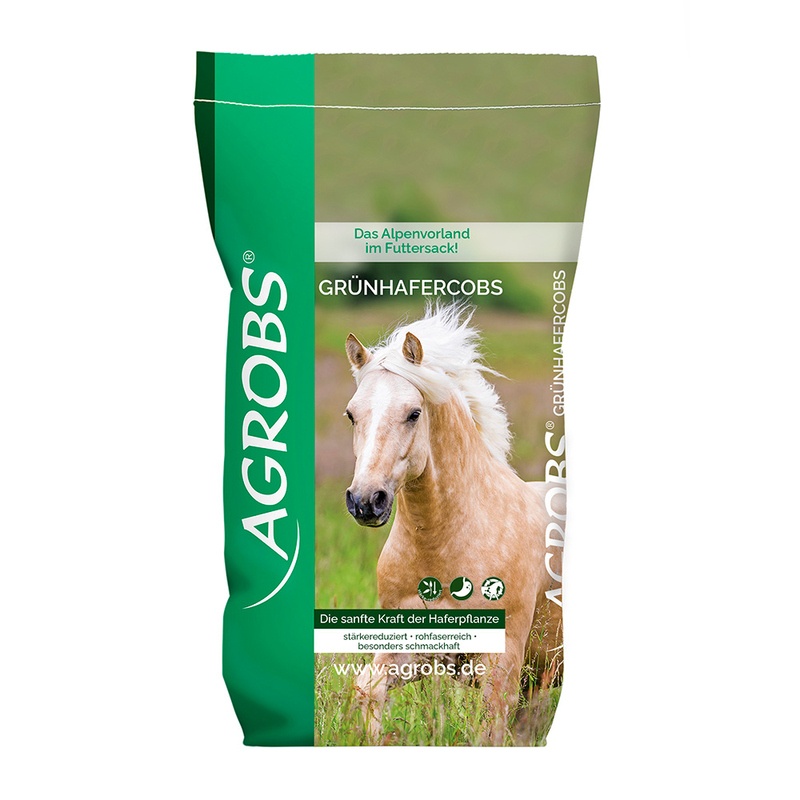
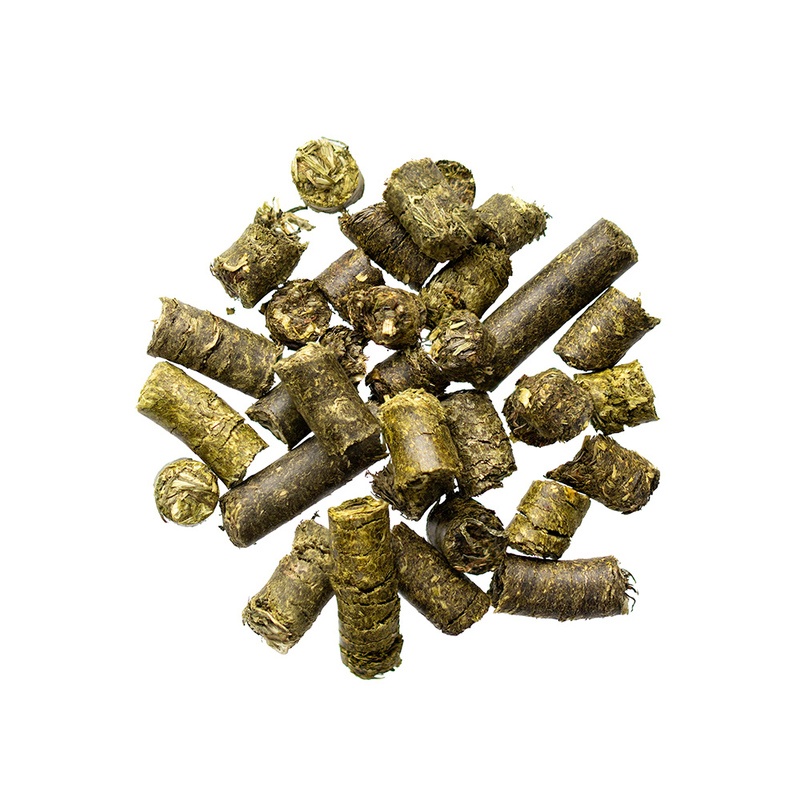
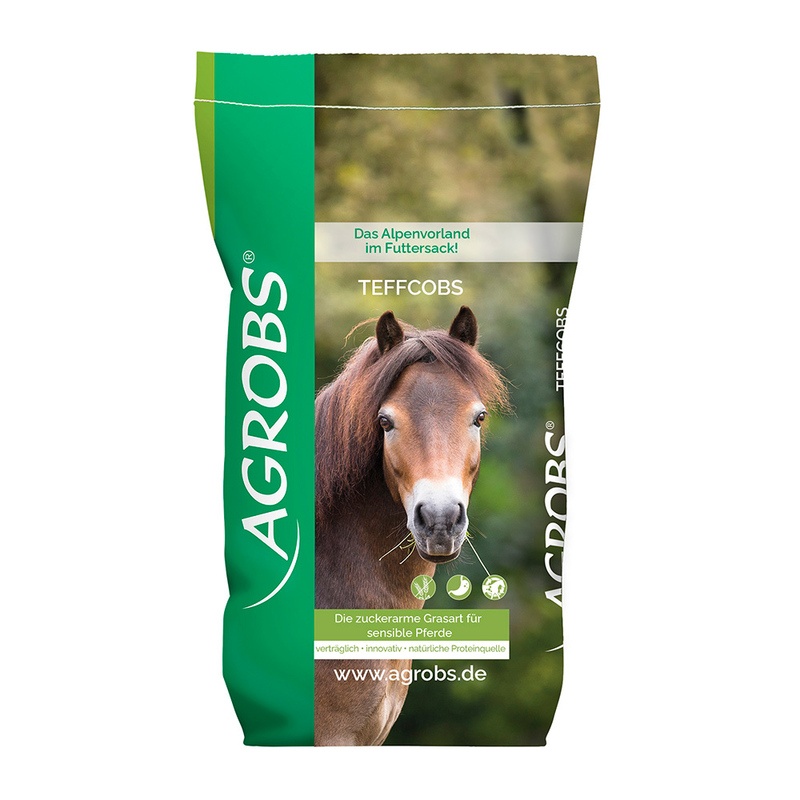
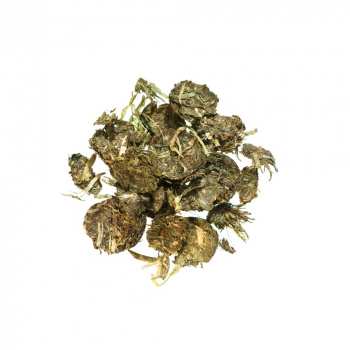
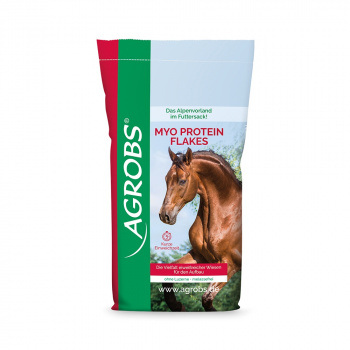
In our part of the world, the content of non-structural carbohydrates (= sugar + fructans + starch) is often much higher than the 10 percent recommended for horses with metabolic disease. In theory, you can reduce the content by soaking the hay in water for a while, which washes out some of the water-soluble sugars and fructans. The problem is that soaking hay is labour-intensive and can cause hygiene issues if wet hay is not fed straightaway, or if the hay was poor quality before soaking.It's often more practical to mix the hay with straw or alternative roughage sources, such as teff grass, alfalfa, green oats or timothy, as they are much lower in carbohydrates. From our range, this could be e.g., our Teffcobs, Luzernecobs, Myo Protein Flakes or Grünhafercobs.
When deciding, you also need to consider whether the horse has already had laminitis. Soaking hay can be useful during the episode if lower-carbohydrate alternatives to sugary hay aren't available or if symptoms persist despite treatment. You should always plan your horse's diet in close consultation with your vet and the feed ration should be calculated professionally in terms of dietary needs.
What can you do to reduce your (EMS) horse's weight?
Exercise isn't a substitute for a specific diet, but it should definitely be part of the management of fat and laminitis-prone horses. Exercise alone doesn't normally result in weight loss, but it can improve the horse's derailed metabolism. Stamina training can improve the effect of insulin in the cells, which can lower insulin levels in the blood and minimise the risk of laminitis.The European College of Equine Internal Medicine (ECEIM) recommends 30 minutes of moderate intensity training at least five times per week. The goal should be a pulse rate of approximately 130 to 170 beats per minute – in practice, without measuring the pulse, a good aim is to build up from 10 – 15 minutes of trot with 1 – 2 minutes of canter in an unfit horse to 20 minutes of trot and 10 minutes of canter.
The hooves of horses who are only just recovering from laminitis are not yet strong enough to cope with his kind of workload. If the horse is sound and wearing good hoof protection, you can progress from long walks (60–120 minutes) to increasing intervals of trot. After some time, if the horse remains sound, a realistic goal is brisk trot intervals three times per week with a little canter, without a rider's weight.
The step-by-step weight-loss plan for your horse:
How can you put this knowledge into practice? Here's a structured approach for reducing your horse's excess weight:
Step 1: Evaluate the current situation
- Find out the horse's body condition score
- Take photos from the side and back
- Weigh all feed accurately (including hay if possible)
- Ideally, also weigh the horse
- Estimate the ideal weight to aim for
Step 2: Adjust the feed
We'll be happy to help you as part of our feeding advice service.
- Calculate requirements
- Find the appropriate forage combination
- Add micronutrients as appropriate and, if applicable, protein to the calculation in a targeted way
- Slowly adjust the ration to the new calculation
- Carefully minimise feeding times: use automatic feeders, haynets and slow feeders
Step 3: Adjust exercise
- Current level: how much exercise are we actually doing at the moment?
- Draw up an exercise plan
- Observe the horse closely: is it doing too much or not enough exercise?
- Don't forget hoof protection!
Step 4: Keep a record of progress
- Around a week after changing the diet: use a weigh tape once a week; approx. 1–1.5 cm less per week is realistic
- Take new photos every month: do you notice a difference?
- Weigh the horse regularly if possible. Weight loss of 0.5–1% per week is ideal.
Step 5: Stick with it and make adjustments if necessary
- Weight loss is a marathon, not a sprint!
- Good doers will need a restricted diet and enough exercise for their whole life
- Is your horse still not losing weight despite diet and exercise? We'll be happy to help you check and adjust your management. Here you can access our feeding advice service.


Advice, research and development
September 2026 ©, AGROBS® GmbH & Co. KG
- Coenen, M., Veruert I. (2020): Pferdefütterung. Georg Thieme Verlag KG, Stuttgart
- Geor, R.J.; Harris, P.A.; Coenen, M. (2013): Equine Applied and Clinical Nutrition: Health, Welfare and Performance. Saunders Elsevier.
- Durham, A. E., Frank, N., McGowan, C. M., Menzies-Gow, N. J., Roelfsema, E., Vervuert, I., Feige, K., & Fey, K. (2019). ECEIM consensus statement on equine metabolic syndrome. Journal of veterinary internal medicine, 33(2), 335–349. https://doi.org/10.1111/jvim.15423